Westminster has a genuinely unusual property profile compared to most London boroughs — a huge proportion of housing here is flats, mansion blocks and managed buildings, many let or sub-let through agents rather than owner-occupied. For landlords, letting agents and managing agents working across areas like Pimlico, Victoria, Marylebone and Bayswater, decorating decisions tend to come with a slightly different set of priorities than a typical family home repaint.
How Often Should a Landlord Decorate?
There’s no fixed legal requirement in England dictating exactly how often a rental property must be repainted, but most landlords and managing agents work to a practical standard: a full repaint roughly every three to five years, or sooner if walls are visibly marked, scuffed or discoloured between tenancies. Letting agents typically expect a property to be handed back in a similar condition to how it was let, and a tired paint job is one of the more common reasons a viewing underperforms or a deposit deduction ends up disputed. For managed buildings and flats that change tenants more frequently, checking condition at every changeover — rather than working to a fixed schedule — tends to be the more practical approach.
Turnaround Time Matters More Than Almost Anything Else
A flat sitting empty between tenancies is a flat not generating rent, and in a market as competitive as central London, even a few extra days can matter. Decorators working regularly with Westminster landlords and agents understand that a fast, well-planned turnaround between tenants is often the single most important factor, more so than any particular finish or colour choice.
Durable, Neutral Colours Reduce Repaint Frequency
For any rental property, a well-chosen, durable neutral palette tends to work harder than a more personal colour scheme would. Warm off-whites and light greys in a durable matt or eggshell finish show marks less than a flatter finish, wear more slowly, and appeal to the widest possible range of future tenants — reducing how often a full repaint is actually needed between lets.
Communal Areas Reflect on Every Flat in the Building
Managed buildings and mansion blocks across Westminster typically have communal entrances, hallways and stairwells that fall under a managing agent’s responsibility rather than any individual leaseholder’s. A well-maintained communal area sets expectations before a viewing has even reached the flat itself, and a tired, scuffed entrance can undermine how favourably every single flat in the building is perceived, regardless of how well-presented the individual unit is.
Working Around Occupied Buildings
Unlike a standalone house, decorating work in a managed building often has to work around other residents, building access hours, lift bookings and sometimes freeholder permissions for anything beyond a straightforward repaint. Experienced decorators factor this in from the outset — scheduling noisier work at reasonable hours, protecting shared corridors and lifts during material transport, and keeping disruption to other leaseholders to a minimum.
Documentation Matters for Agents and Landlords
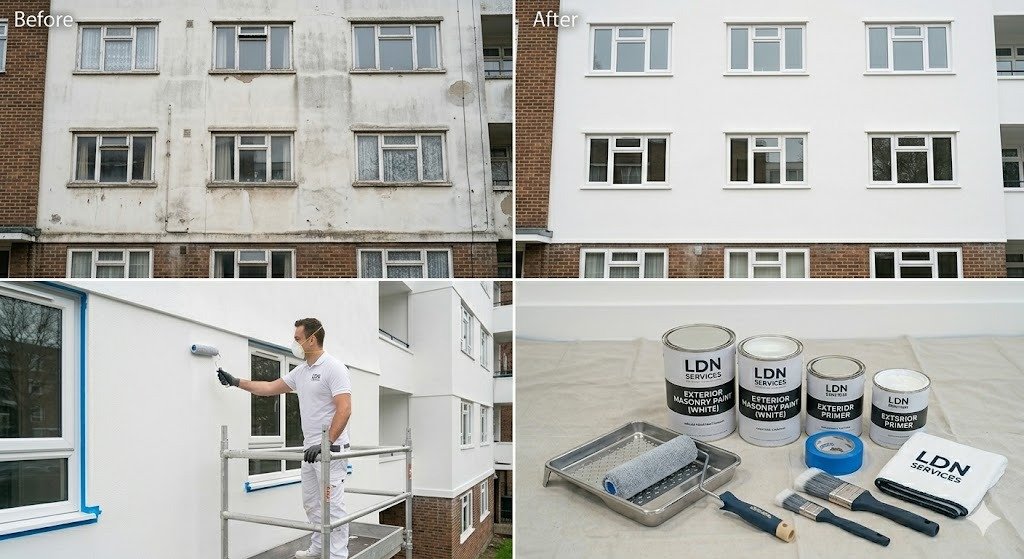
For letting agents managing multiple properties, having clear before-and-after documentation of decorating work — useful for deposit protection schemes, check-out reports and demonstrating property condition — is often as valuable as the work itself. It’s worth asking a decorator directly whether they can provide dated photos as standard, since this can save considerable time and disagreement at the end of a tenancy.
End-of-Tenancy Timing Needs Planning
Coordinating decorating work between a tenant moving out and a new tenant moving in requires realistic scheduling, particularly if there’s also cleaning, inventory checks and repairs happening in the same window. Agreeing a clear schedule with a decorator in advance — rather than trying to arrange access at short notice — tends to avoid the kind of delays that push back a new tenancy’s start date.
Commercial and HMO Considerations
Westminster’s mix of commercial units, serviced apartments and licensed HMOs each bring their own requirements, from fire-rated paint specifications in shared areas to more frequent redecoration cycles for higher-turnover accommodation. It’s worth discussing the specific property type directly with a decorator rather than assuming a standard residential approach will automatically apply.
Building a Reliable Ongoing Relationship
For landlords and agents managing several properties across Westminster, having a single, reliable decorating contact who already knows the buildings, the access arrangements and the expected standard tends to save considerably more time than sourcing a new decorator for every individual job. Our landlord repainting service is built around exactly this kind of ongoing relationship, rather than treating every repaint as a one-off.